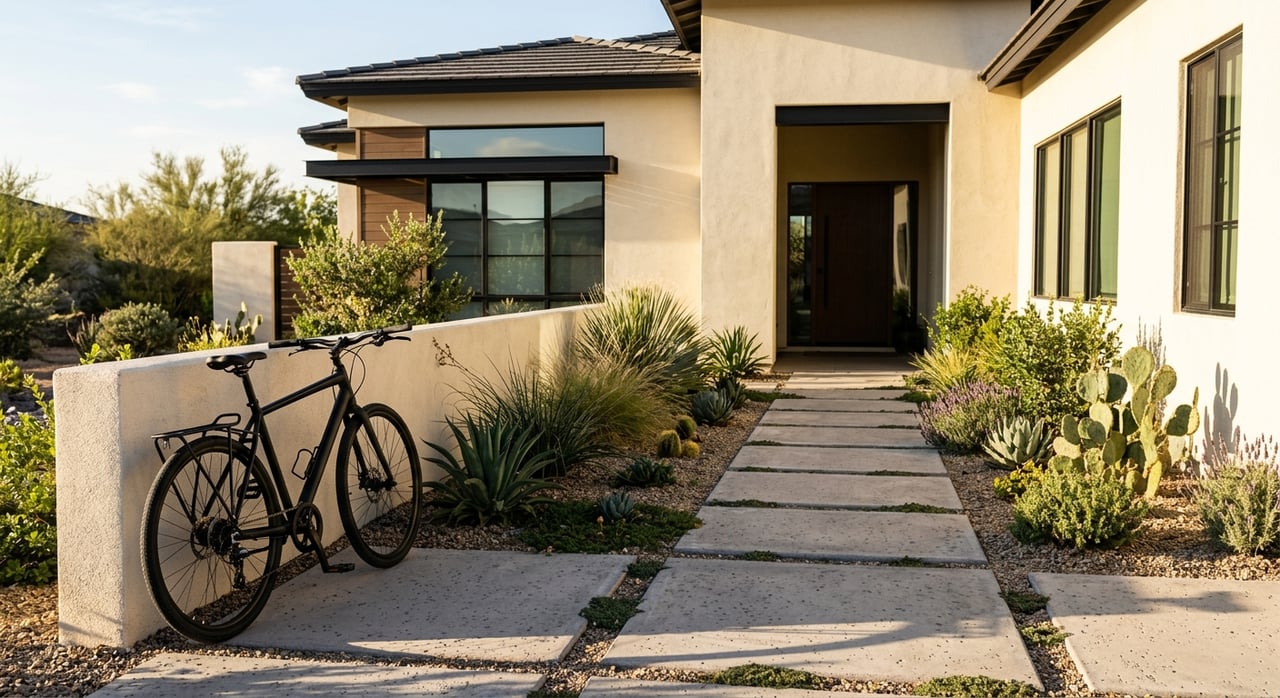
If you are hoping to cut back on driving without giving up convenience, Tempe is one of the more realistic places in the Valley to do it. You may still want a car for some trips, but in the right parts of the city, daily life can feel much more walkable, bikeable, and transit-friendly than many people expect. The key is knowing where that car-light lifestyle works best, what a normal day actually looks like, and where the tradeoffs show up. Let’s dive in.
Car-light works best in Tempe's core
Tempe is a strong fit for a car-light lifestyle, not necessarily a fully car-free one. The city’s Transportation Plan 2050 aims for neighborhoods that are walkable, pleasant, safe, and connected within a 20-minute walk, bike, or transit ride.
That goal lines up with what Tempe already has on the ground. The city reports about 90% sidewalk coverage, more than 220 miles of bikeways, and nearly 7.1 million transit boardings in FY25. Tempe also says it has the highest per-capita transit ridership in the region.
In everyday terms, that means you can often replace some driving with a mix of walking, biking, light rail, streetcar, and local circulators. The experience is strongest in the central part of Tempe rather than evenly spread across the whole city.
Where car-light living feels easiest
The best mental map is a downtown-lake-university triangle. If you want to live with fewer car trips, this is the area to understand first.
Downtown Tempe and Mill Avenue
Downtown Tempe is the clearest example of car-light living in the city. This is where you get a mix of restaurants, shopping, culture, entertainment, and everyday activity in a more compact setting.
The city’s Downtown Refresh project is also improving the walking experience. Plans include wider brick sidewalks, ADA updates, new irrigation, and more than 120 trees between University Drive and Rio Salado Parkway.
For you, that matters because comfort adds up. Wider sidewalks and more shade can make short walks feel much more practical, especially during warmer months.
Tempe Town Lake and Rio Salado
Tempe Town Lake gives the area another layer of car-light convenience. The city calls it Arizona’s second-most visited public attraction, with more than 2.4 million visitors each year.
The lake itself is 2.5 miles long and has 12-foot concrete paths on both sides. Those paths connect through the Mill Avenue bridges and Rural Road Bridge, and they are open daily from 5 a.m. to midnight.
That makes the lakefront useful for more than recreation. It supports walking, jogging, biking, skating, and daily movement between nearby destinations, while also adding a strong lifestyle draw.
ASU and the Apache corridor
The ASU area and Apache Boulevard corridor are another major hub for car-light living. Tempe’s transportation data shows top rail boardings at University Drive and Rural Road, McClintock Drive and Apache Boulevard, and Veterans Way and College Avenue.
Streetcar activity clusters here too, with top stops including Dorsey Lane and Apache, Rural Road and Apache, and College Avenue and Apache. That concentration points to a clear transit rhythm around campus and along the Apache corridor.
If you live near this spine, you are more likely to feel like transit is part of daily life instead of a backup plan. That can make a big difference in how often you actually choose not to drive.
The tools that make it possible
A car-light lifestyle only works when you have multiple ways to get around. Tempe stands out because it does not rely on just one option.
Light rail as the backbone
Valley Metro Rail is the main regional transit backbone. It offers 35 miles of service, 49 stations, runs 365 days a year, and operates more than 20 hours a day with 12-minute peak service.
Tempe has nine light rail stops, which helps connect the city to nearby parts of the metro. It also gives you a practical option for commuting, events, and longer trips without getting behind the wheel.
Streetcar for short local trips
The Tempe Streetcar fills in shorter local trips in the city core. It is 3.1 miles long, has 14 stops, and runs daily every 15 to 20 minutes.
Its route follows Mill and Ash avenues from Rio Salado Parkway and Marina Heights to Dorsey Lane and Apache Boulevard. If your routine stays near downtown, the lake, or the ASU area, that short-grid service can be especially useful.
Orbit and local bus routes
Tempe also has unusually strong local transit coverage. The city has 13 bus routes, two express routes, one free Flash route, and six free Orbit circulators.
Orbit is a big part of what makes day-to-day car-light living realistic. It serves shopping areas, neighborhoods, schools, and multi-generational centers for free, uses flag zones in residential areas, and runs seven days a week on most routes.
That kind of service helps with ordinary errands. Instead of saving transit only for work or school, you may be able to use it for groceries, appointments, or meeting friends.
Biking as a real option
Tempe has also built a strong identity around biking. The city’s BIKEiT network is designed to connect major destinations, neighborhoods, downtown Tempe, and ASU.
The city says bike boulevards use lower-traffic, lower-speed streets or pathways for a more comfortable ride. Tempe’s off-street network also includes the Grand Canal, Indian Bend Wash, Rio Salado, Western Canal, and Kyrene corridors.
For many residents, biking is what closes the gap between walking and transit. It can make short trips faster and give you more flexibility without needing to drive.
What a normal day can look like
In the right part of Tempe, a car-light routine can feel pretty natural. You might walk or bike to coffee, class, work, or a nearby errand, use Orbit or a bus for short practical trips, and take the streetcar or light rail when you need to go farther.
Later in the day, it is easy to picture a walk along Mill Avenue or time on the lake paths. That rhythm works because the destinations and the transportation options overlap in the same core corridors.
This is also where Tempe’s mixed-use feel matters. The city has a population above 180,000, a median age of 28.1, and a downtown anchored by ASU, with more than 40 events and festivals in the downtown and lake district.
That steady activity supports a lifestyle where you are not always making a special trip by car. In the right location, more of your routine can happen close together.
The tradeoffs to plan for
Car-light living in Tempe is real, but it is not the same in every neighborhood. The strongest experience is near downtown, ASU, the lakefront, and the Apache, Mill, Rural, and College spine.
Farther from those areas, you may still need a car for some errands or cross-Valley trips. That does not mean the lifestyle stops working, but it may shift from daily car-light living to partial car-light living.
Comfort is another practical factor. Shade and streetscape improvements matter in Arizona, which is why features like the shaded courtyard at the Tempe Transportation Center and the added trees in downtown are worth noting.
Weekend service is less of a concern than many people assume. Light rail runs all year, the streetcar runs daily, and Orbit runs seven days a week on most routes, so transit remains useful beyond the Monday-through-Friday commute.
Helpful places and connections
One especially useful hub is the Tempe Transportation Center at 200 E. Fifth Street. It connects bus, Orbit, and light rail service, and includes a shaded courtyard, retail, and a bicycle cellar with bike repair and accessories.
Several bus routes serve the center, including five free Orbit routes. If you are trying to reduce driving, this kind of transfer point makes the network much easier to use.
Airport access is also more manageable than some buyers expect. Valley Metro connects riders to PHX Sky Train at 44th Street and Washington, which means some airport trips can be done without relying only on a car.
Why this matters when choosing where to live
If a car-light lifestyle is important to you, location inside Tempe matters just as much as location in Tempe. Two homes can have the same city address but offer very different day-to-day mobility depending on how close they are to the downtown-lake-university core.
That is why it helps to think beyond square footage and price. You also want to look at how easily you can reach transit, paths, errands, and daily destinations without turning every outing into a drive.
For some buyers, that means prioritizing access to light rail or Orbit. For others, it means being near bike routes, downtown amenities, or the lakefront path system.
If you are comparing areas in Tempe, a local, block-by-block perspective can save you time. A neighborhood may look close on a map, but the real question is how it functions in daily life when you are trying to drive less.
If you want help finding a home that matches the way you actually want to live, Braden Johnson can help you compare Tempe locations with a practical, local lens.
FAQs
Can you really live car-light in Tempe?
- Yes, especially in core areas near downtown Tempe, Tempe Town Lake, ASU, and the Apache corridor, where walking, biking, light rail, streetcar, and free Orbit service overlap.
Where is car-light living easiest in Tempe?
- The easiest areas are generally the downtown-lake-university triangle, including Mill Avenue, the lakefront, and the ASU, Apache, Rural, and College corridors.
What transit options support car-light living in Tempe?
- Tempe has nine light rail stops, the 3.1-mile Tempe Streetcar, 13 bus routes, two express routes, one free Flash route, and six free Orbit circulators.
Is biking practical for daily trips in Tempe?
- In many parts of Tempe, yes. The city reports more than 220 miles of bikeways, and its BIKEiT network is designed to connect neighborhoods, downtown, ASU, and major destinations.
Does Tempe transit run on weekends?
- Yes. Light rail runs 365 days a year, the streetcar runs daily, and Orbit operates seven days a week on most routes.
Can you get to the airport from Tempe without driving?
- Yes. Valley Metro connects riders to PHX Sky Train at 44th Street and Washington, which can make airport trips possible without driving the whole way.