Racing between classes, work, and life gets a lot easier when your neighborhood is set up for a quick ASU commute. If you are planning a move to Tempe or looking for a better location for next semester or the next few years, you have options that fit different lifestyles and budgets. In this guide, you will compare the most commute-friendly areas near the Tempe campus, from walk-to-class blocks to quiet, bikeable streets and light rail hubs. Let’s dive in.
How ASU commuters get around
Getting to ASU Tempe is simple when you match your neighborhood to your preferred mode:
- Walking is ideal if you live within about a half to one mile of the campus core.
- Biking stays quick on Tempe’s on-street lanes and multi-use paths, especially along Tempe Town Lake.
- Light rail and local buses connect many neighborhoods and cut down on parking stress.
- Driving is straightforward on major arterials like Rural and McClintock and freeways like Loop 202, US 60, and I 10.
Time of day matters. Traffic and parking tighten around class changes and big events near Mill Avenue, Apache Boulevard, Rio Salado, and Rural Road. If you plan to drive, build in a buffer for those windows.
Walk-to-campus neighborhoods
If you want to leave the car at home and stroll to class, these areas sit closest to the Tempe campus.
Downtown Tempe and Mill Avenue
This is the most walkable pocket in Tempe, with many homes and apartments within a 10 to 20 minute walk of the campus core. You are steps from dining, coffee, grocery options, and light rail stops. Housing leans toward high-density apartments, condos, and some converted historic homes.
- Pros: Shortest walk, plentiful amenities, reliable transit access.
- Trade-offs: Higher rents for the location, more evening and weekend activity, and limited or paid parking.
Blocks south and east of campus
Neighborhoods near Sun Devil Stadium, College Avenue, and streets just beyond the campus edges put you within a 5 to 20 minute walk, depending on the block. Housing ranges from small single-family homes to duplexes and student-focused rentals.
- Pros: Fast walk to class and games, simple routines without a car.
- Trade-offs: Higher turnover and a more student-focused environment that can be active at night.
Best for biking within 10–20 minutes
A bike can open up calmer, more residential streets while keeping your trip to campus quick and predictable.
Tempe Town Lake and Rio Salado
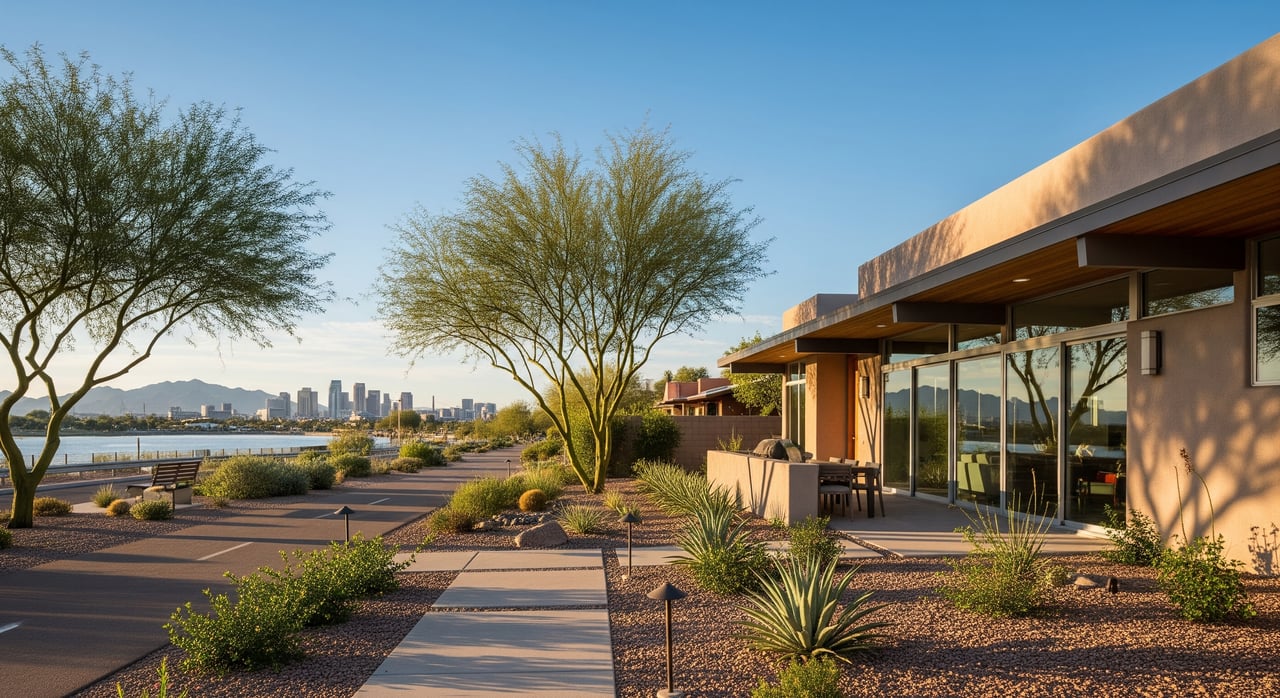
The multi-use paths along the water give you a flat, low-stress ride right into campus. You will also find parks, recreation, and views that make daily trips more enjoyable. Housing includes newer condos, apartments, and some townhomes.
- Pros: Protected paths, scenic rides, easy access to campus.
- Trade-offs: Event days can bring crowds, and newer buildings may come with higher price points.
South Tempe and Broadmor area
South of University Drive, you will find a mix of quiet streets and direct bike routes on Rural and McClintock that reach campus in about 10 to 20 minutes. Homes include older single-family houses and mid-size apartment communities.
- Pros: Quieter feel with yard space in many areas, solid bike access.
- Trade-offs: Longer walk to nightlife and campus buildings, so a bike is key.
Tempe Heights and North Tempe
These established neighborhoods offer residential streets with bike lanes that connect to campus in roughly 10 to 20 minutes. Expect older single-family homes and a more traditional neighborhood feel.
- Pros: Stable blocks with a residential vibe, good bike connections.
- Trade-offs: Walkability varies by street, and purpose-built student housing is less common.
Biking tips
- Look for on-site bike storage or covered racks when touring buildings.
- E-bikes and scooters can help flatten longer rides with heat or hills.
- Check how your preferred route handles busy intersections and whether there is a protected path option.
Transit-focused options near light rail and Orbit
If you want predictable travel times without parking hassles, living near a station or circulator stop can be a smart move.
Station-area neighborhoods
Areas around Downtown Tempe, Apache Boulevard and Dorsey, Rural Road stations, and the Hayden Ferry district near Tempe Town Lake offer easy access to light rail. You can ride directly to campus, downtown Phoenix, or east to Mesa. Housing often includes mid- and high-density apartments and condos.
- Pros: Consistent travel times during rush periods and a car-free option for regional trips.
- Trade-offs: Your first or last mile still matters. Check walking distances, bus or Orbit frequency, and how you will carry groceries or gear.
Transit checklist
- Map your door-to-door route including any transfers.
- Compare peak and midday schedules for your classes or shifts.
- Ask about student or staff transit pass programs and building-level bike or scooter parking.
Quick driving and regional access
If you split time between ASU and East Valley or Phoenix job hubs, a short drive to campus with strong freeway access can save time.
North Tempe west of McClintock
These neighborhoods feed into McClintock or Rural for a quick hop to campus during off-peak times. Many streets are quieter with more single-family homes and yards.
- Pros: Short drive, residential feel, often preferred for longer stays.
- Trade-offs: Less walkable to campus and nightlife, and on-campus parking requires planning.
Southeast Tempe near Loop 202
You get fast connections to Chandler, Mesa, Scottsdale, and the airport while staying within a local drive to ASU, often 10 to 20 minutes depending on time of day. This suits staff with regional commutes.
- Pros: Best freeway connectivity to East Valley employers.
- Trade-offs: More car dependent and longer walk or bike to campus.
West Tempe near US 60 and I 10
These areas provide strong access to Phoenix and western suburbs while keeping campus reachable in around 10 to 25 minutes, traffic permitting.
- Pros: Regional reach for jobs and weekend trips.
- Trade-offs: Lower walkability and more reliance on driving and parking.
What to know about parking and passes
On-campus parking is controlled and often costly, and many nearby neighborhoods use residential permits. Budget for permits and read building or HOA rules before you sign a lease or make an offer. If you want to avoid driving, target homes within a half to one mile of campus or close to light rail and Orbit stops.
Students and staff should review current ASU parking and transit programs for any pass options. Night games and graduations can change campus and street conditions, so check event schedules when you plan routes.
Amenities that make life easier
- Groceries: You will find popular chains in and around Downtown Tempe and along major arterials like Rural and McClintock.
- Healthcare: Urgent care and hospital options sit within Tempe and nearby Phoenix.
- Dining and nightlife: The highest concentration is along Mill Avenue and the campus edge. Quieter neighborhoods often trade nightlife for calm streets.
- Parks and recreation: Tempe Town Lake, Tempe Beach Park, and neighborhood parks support runs, workouts, and study breaks.
Choosing the right neighborhood
Use your commute and daily routine to guide your pick. Start with how you prefer to travel, then match your housing type and budget.
If you want to walk
Focus on Downtown Tempe, Mill Avenue blocks, and streets just south or east of campus. This keeps errands, classes, and events close and simple.
If you want a calmer vibe
Look at Tempe Heights, the Broadmor area, or quieter pockets of North and South Tempe. Plan on biking or a short drive to campus.
If you want car-free regional access
Pick a station-area building near light rail or close to Orbit routes that feed into campus. Map your first and last mile.
If you split time between ASU and work
Choose neighborhoods near Loop 202, US 60, or I 10 with quick access to Rural or McClintock. Weigh on-campus parking costs against time savings.
Trade-offs by neighborhood type
- Walk-to-campus areas: Fastest to class, most amenities, higher rent, and more activity.
- Bikeable residential streets: Balanced commute, more space, quieter nights, and a bit farther from nightlife.
- Transit-oriented hubs: Car-free regional reach and predictable ride times, with planning needed for the last mile.
- Driver-first pockets: Best regional access and easier parking at home, with more driving and campus parking planning.
How to compare options in one afternoon
- Time two door-to-door trips from your shortlist during a class-change window and a midday hour.
- Walk the block at night to check lighting, noise, and how you will store a bike or scooter.
- Review parking rules, pass costs, and any neighborhood permit requirements.
- Confirm lease terms or HOA rules for guests, pets, and parking.
Where pricing fits into the picture
Near-campus demand from students, faculty, and staff drives a range of rent and sale prices, and seasonality matters. Summer move-outs and August move-ins can shift availability fast. For current median sale prices, rent ranges, and inventory in your target blocks, review recent local data and date-stamp your snapshot before you decide. If you want help aligning budget and area fit, we can pull an up-to-the-minute view for your shortlist.
Final take
You have great choices in Tempe, whether you want to walk to class, bike along the lake, ride the light rail, or keep fast freeway access for a regional commute. The right neighborhood depends on how you travel, the lifestyle you want outside of class or work, and how much you want to spend on parking versus time. If you want a quick, local read on blocks that match your routine, reach out. As a Tempe native and Southeast Valley specialist, I can help you pick the right fit and move with confidence.
Ready to see tailored options and routes that match your day-to-day? Connect with Braden Johnson for a custom shortlist and commute plan.
FAQs
How close can I live to walk to ASU Tempe?
- Many homes and apartments within about a half to one mile of the campus core make a 5 to 20 minute walk common, depending on your exact block and route.
Which Tempe neighborhoods are best for biking to campus?
- Tempe Town Lake and Rio Salado, the Broadmor and South Tempe area, and Tempe Heights or North Tempe often give you 10 to 20 minute rides on lanes and multi-use paths.
Is light rail a good option for getting to ASU Tempe?
- Yes. Living near station areas on Apache Boulevard, Downtown Tempe, Rural Road, or Hayden Ferry gives predictable ride times and car-free regional access when you plan your first and last mile.
Where should I live if I also commute to East Valley job centers?
- Southeast Tempe near Loop 202 or west and north Tempe with access to US 60, I 10, McClintock, and Rural help balance a short campus drive with regional reach.
What should I know about parking near campus?
- On-campus parking is controlled and often costly, and nearby neighborhoods may have permit rules. Budget for permits and check building and HOA policies before you sign.
How does seasonality affect near-campus rentals?
- Student demand peaks around August move-ins and summer move-outs, so pricing and availability can shift quickly. Plan ahead if you want a specific block or building.